Start a Free Service Call Today! ($49 Value)
What Minnesota Homeowners Actually Pay for Level 2 EV Charging in Maple Grove, MN
Breaking Down Equipment, Labor, and Upgrade Expenses
From equipment costs to panel upgrades, understand every expense before you plug in
Equipment & Charger Type Costs
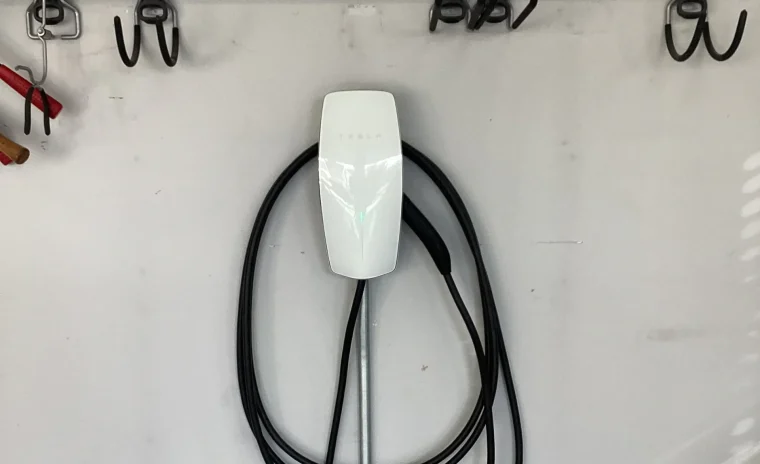
The charger unit itself represents the first major cost decision for any Level 2 installation. In 2026, entry-level hardwired Level 2 chargers typically range from $400 to $650, offering basic 32-amp or 40-amp output with simple LED status indicators and durable weatherproof enclosures. These units deliver between 7.7 kW and 9.6 kW of power, adding roughly 25 to 35 miles of range per hour of charging for most electric vehicles. For homeowners who primarily charge overnight and don’t need remote monitoring, these models provide excellent value without unnecessary complexity.
Smart-enabled chargers with WiFi connectivity, mobile app control, scheduling features, and energy monitoring sit in the $650 to $1,200 range. These units allow you to track charging sessions, schedule charging during off-peak electricity rates, and receive notifications when charging completes. Some models integrate with home automation systems or offer load-balancing features that prevent circuit overloads when multiple high-draw appliances operate simultaneously. For Minnesota homeowners on time-of-use utility rates, the scheduling capability alone can generate meaningful savings over the charger’s lifespan.
Amperage rating directly impacts both charging speed and total project cost. A 32-amp charger requires a 40-amp dedicated circuit, while a 48-amp charger needs a 60-amp circuit. The higher amperage demands heavier gauge wiring, larger breakers, and potentially more extensive electrical work. Most residential installations in the Maple Grove area settle on 40-amp or 48-amp chargers, which strike a practical balance between charging speed and infrastructure requirements. A 48-amp unit can fully charge most EVs with 60-75 kWh batteries in six to eight hours, accommodating typical overnight charging schedules even after longer daily commutes.
Connector type affects compatibility and future-proofing. J1772 connectors remain the North American standard for Level 2 charging and work with virtually all electric vehicles sold in the United States. Some homeowners opt for hardwired units without removable cables to reduce theft risk and weathering of connectors, while others prefer plug-in models with NEMA 14-50 outlets for portability. The hardwired approach typically costs $75 to $150 more upfront but eliminates the outdoor outlet as a potential maintenance point and ensures the installation meets Minnesota code requirements for permanent EV charging equipment.
Electrical Panel & Wiring Requirements
The existing electrical infrastructure in your home often determines whether a Level 2 charger installation remains straightforward or becomes significantly more involved. Most Level 2 chargers require a dedicated 40-amp to 60-amp circuit, and many homes built before 2000 operate on 100-amp or 150-amp main service panels. If your panel already runs near capacity with air conditioning, electric heating, water heaters, and kitchen appliances, adding a high-draw EV charger may exceed safe loading limits. In these situations, upgrading to a 200-amp service panel becomes necessary, adding $1,800 to $3,500 to the project depending on panel location, existing panel condition, and utility meter configuration.
Minnesota homes, particularly in established Maple Grove neighborhoods, often present unique challenges. Many properties built in the 1970s and 1980s feature aluminum branch wiring or older panel configurations that require careful evaluation before adding new high-amperage circuits. Clay soil common throughout the region can make trenching for garage or detached accessory structure installations more difficult, especially during late fall when ground conditions become less predictable. Licensed electricians account for these factors when estimating wire routing and conduit installation costs.
Wire gauge and conduit represent another significant cost variable. A 40-amp circuit typically requires 8-gauge copper wire, while a 60-amp circuit needs 6-gauge wire. If the distance from your panel to the charger location exceeds 75 feet, voltage drop calculations may require stepping up to heavier gauge wire to maintain proper charging voltage. Copper wire prices fluctuate with commodity markets, but as of 2026, 8-gauge copper typically costs $1.80 to $2.40 per foot, while 6-gauge runs $2.80 to $3.60 per foot. Add conduit, junction boxes, and mounting hardware, and the wire run alone can contribute $400 to $900 to the installation cost for typical garage installations.
If your charger installation requires routing through finished walls, attic spaces, or concrete floors, labor costs increase substantially. Cutting through poured concrete basement floors to route conduit into an attached garage might add $300 to $600 to the project. Running wire through finished living spaces to reach a detached garage often requires drywall repair and repainting, adding both time and expense. The most cost-effective installations occur when the charger mounts on a garage wall directly opposite or adjacent to the main electrical panel, minimizing wire runs and avoiding structural obstacles.
Labor, Permits & Code Compliance
Labor costs for Level 2 EV charger installation in the Minneapolis metro area typically range from $750 to $1,800, depending on project complexity and electrician experience. Standard installations with short wire runs, accessible panels, and no upgrades required generally fall toward the lower end, often completed in four to six hours. Projects requiring panel upgrades, long conduit runs, or work in finished spaces can extend to eight or ten hours, pushing labor costs higher. As of late 2026, licensed electricians in Maple Grove charge between $110 and $165 per hour for residential work, with many offering flat-rate pricing for common installations to provide cost certainty upfront.
Timeline expectations matter for planning purposes. Most straightforward installations can be completed in a single day once permits clear and materials arrive. Panel upgrades may require utility coordination for temporary service disconnection, potentially adding one to three days depending on utility scheduling. Minnesota’s building inspection requirements mean you cannot begin using your charger until the installation passes final inspection, which typically occurs within three to five business days of requesting inspection. Winter installations sometimes face scheduling delays due to weather-related workload surges, particularly after ice storms or periods of extreme cold that stress electrical systems across the region.
Permit costs in Maple Grove and surrounding communities typically range from $85 to $175 for residential EV charger installations. The permit process protects homeowners by ensuring installations meet Minnesota electrical code requirements, maintain proper circuit protection, and include appropriate ground-fault protection for outdoor or garage installations. Inspection fees are usually included in the permit cost, though some jurisdictions charge separately for re-inspections if initial work does not meet code. Working with a licensed contractor familiar with local inspection offices can streamline the permitting process and reduce the chance of installation delays.
Minnesota electrical code requirements for EV chargers include dedicated circuit protection, proper wire sizing for the load and distance, appropriate disconnect means within sight of the charger, and ground-fault circuit interrupter protection when required by equipment type and location. Outdoor installations or those in attached garages must use weatherproof enclosures and proper conduit protection. These code requirements protect both your home’s electrical system and your vehicle, ensuring safe operation over the equipment’s expected 10 to 15-year service life. Installations that skip permitting or use unlicensed contractors may void equipment warranties, create liability issues, and complicate future home sales when disclosure questions arise.
Hidden Costs & Long-Term Value
Beyond the obvious equipment and labor expenses, several hidden costs can affect your total investment. Permit delays sometimes extend project timelines when building departments experience seasonal workload surges or staffing constraints, potentially leaving you without home charging longer than anticipated. If your installation requires trenching through landscaped areas to reach a detached garage or carport, restoration costs for sod, mulch, or decorative stone can add $200 to $500 to the final bill. Homeowners with shallow underground utilities sometimes discover conflicting infrastructure during excavation, requiring rerouting that adds both time and expense.
Load management systems represent another potential expense that delivers long-term benefits. If your home approaches its panel capacity but doesn’t quite require a full upgrade, a load management device can dynamically reduce EV charging current when other major appliances operate, preventing nuisance breaker trips. These systems cost $400 to $700 installed but allow you to defer a more expensive panel upgrade while still adding Level 2 charging capability. Some utility companies in Minnesota offer rebates or incentive programs for smart chargers with demand-response capability, potentially offsetting $200 to $400 of equipment costs when you enroll in time-of-use programs.
Extended warranties and service plans deserve consideration when calculating total cost of ownership. Most charger manufacturers provide three to five-year warranties covering defects and component failures, but extended coverage adding three to five additional years typically costs $150 to $300. Given Minnesota’s temperature extremes, from subzero winter cold to summer heat and humidity, environmental stress on outdoor electrical equipment can shorten service life compared to more temperate regions. An extended warranty provides protection against weather-related failures that might otherwise require out-of-pocket replacement costs.
Long-term value calculations shift the perspective from upfront cost to total ownership economics. If you currently spend $180 per month on gasoline and shift to home charging at Minnesota’s average residential electricity rate, your fuel costs might drop to $55 to $75 per month depending on your vehicle’s efficiency and driving patterns. Over five years, that $100 to $125 monthly savings accumulates to $6,000 to $7,500, easily offsetting a $2,000 to $3,000 installation investment. Federal tax credits for EV charger installations, when available, can reduce net costs by 30 percent up to specified caps, further improving the economic case for home charging infrastructure.
When considering installation, working with experienced electrical contractors familiar with both Minnesota code requirements and EV charging systems ensures your project proceeds efficiently and meets all safety standards. The upfront investment in proper installation protects both your vehicle and your home electrical system while delivering years of convenient, cost-effective charging that eliminates trips to public charging stations and reduces your transportation operating costs substantially.
Ready to Install Your Level 2 Charger?
Beyond the obvious equipment and labor expenses, several hidden costs can affect your total investment. Permit delays sometimes extend project timelines when building departments experience seasonal workload surges or staffing constraints. In Maple Grove and surrounding communities, permit processing can take anywhere from three to fourteen business days depending on the time of year, and any design changes or code clarifications can reset that clock. While the permit itself might cost $75 to $150, the scheduling delays can push installation dates back by weeks during peak construction months.
Site complications present another category of unexpected expense. Homes built on shallow bedrock or those with utilities running close to foundation walls may require alternate routing paths that add $300 to $800 in additional conduit and labor. Frost depth requirements in Minnesota mandate that any underground conduit be buried at least 18 inches below grade, and if the charger location requires trenching through landscaped areas or concrete patios, restoration costs can add another $400 to $1,200 to the project. Properties with finished basement ceilings or complex wall cavities may also require exploratory work before final routing can be determined.
Warranty considerations deserve attention during the planning phase. Most Level 2 charger manufacturers offer three-year to five-year limited warranties covering defects and component failures, but installation workmanship warranties vary widely. Some electrical contractors provide one-year labor warranties, while others offer extended coverage for an additional fee. Extended warranty packages that cover both equipment and installation typically add $150 to $300 to upfront costs but can save significantly more if service calls become necessary during the first few years.
Long-term value calculations shift the cost perspective entirely. When you compare the expense of home charging to public fast-charging rates, the payback timeline becomes clearer. Public DC fast-charging stations in the Minneapolis metro area currently charge between $0.35 and $0.52 per kilowatt-hour, while residential electricity rates in Minnesota average around $0.14 per kilowatt-hour. For a driver covering 12,000 miles annually in an EV that achieves 3.5 miles per kilowatt-hour, home charging costs approximately $480 per year, compared to roughly $1,800 annually using public fast chargers exclusively. That $1,320 annual savings means a $2,500 total installation cost pays for itself in less than two years.
Home value impact also factors into the long-term equation. Recent market analysis suggests that homes equipped with Level 2 EV charging infrastructure sell faster and often command slight premiums in markets with higher EV adoption rates. While appraisers do not yet uniformly assign specific dollar values to charging equipment, the convenience factor appeals strongly to buyers already driving electric vehicles or planning to purchase one soon. This becomes particularly relevant in neighborhoods where multiple households have made the switch to electric transportation.
Maintenance costs for Level 2 chargers remain minimal compared to other home systems. Unlike HVAC equipment or water heaters, EV chargers contain few moving parts and typically require only occasional inspection to ensure connections remain tight and weather seals stay intact. Annual maintenance, if performed at all, rarely exceeds $100 to $150 and primarily involves visual inspection and connection testing. The electrical services required for ongoing upkeep are straightforward, and most issues that do arise relate to wear on the charging cable rather than the charging unit itself.